
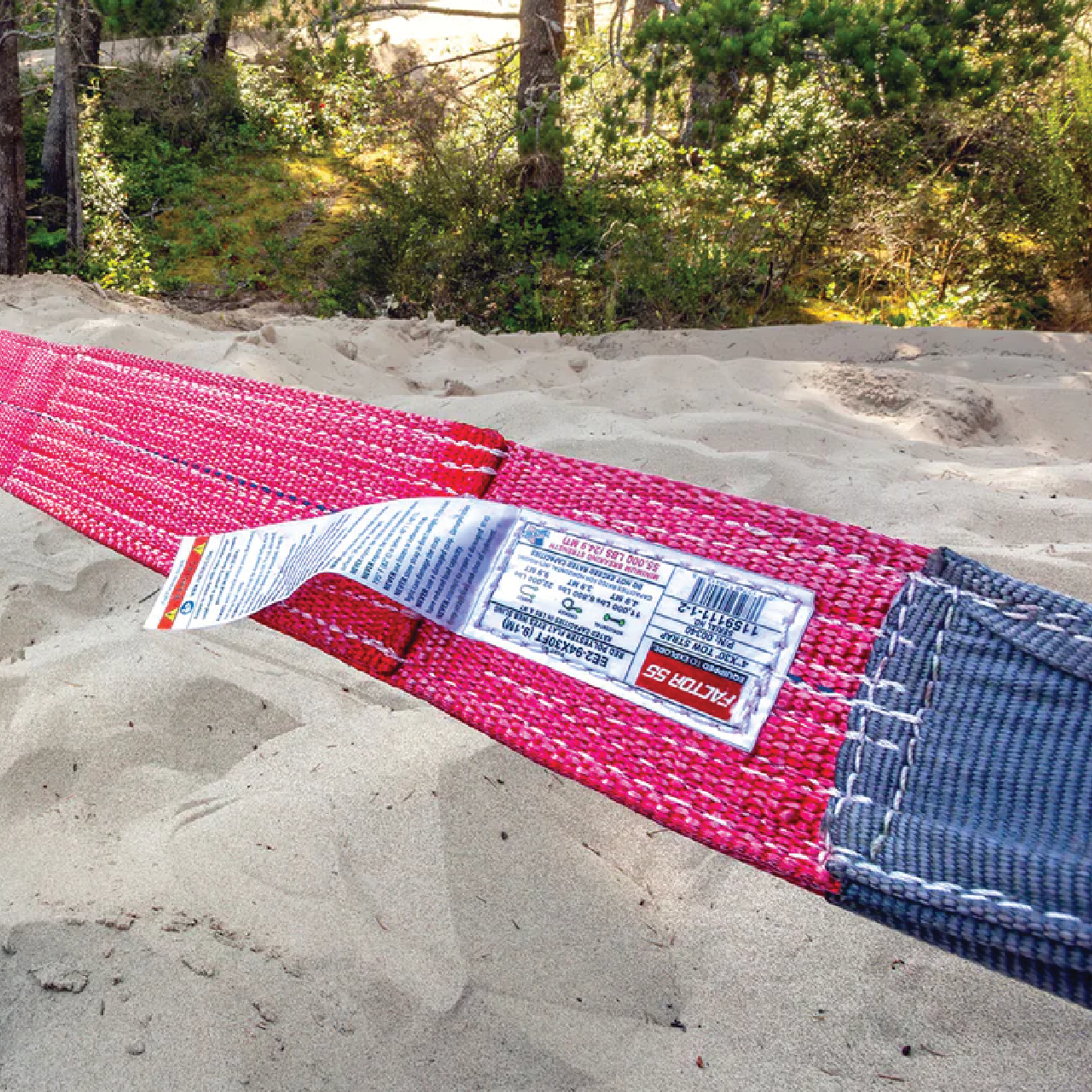
Walk into any off-road shop or browse recovery gear online, and you'll be bombarded with numbers: 30,000 lbs, 20% elongation, 11,000 kg breaking strength. If you're like most people, you'll nod along like you understand what these numbers mean, throw a strap in your cart that "looks about right," and hope for the best.
But here's the thing: choosing a recovery strap based on guesswork is a gamble you don't want to take. Use too light a strap and it could snap under load, sending a high-speed projectile toward your vehicle. Use one that's too heavy and you're carrying unnecessary weight and spending more money than needed. Understanding strap ratings isn't about being a gear nerd—it's about safety and effectiveness.
Let's demystify these ratings so you can make informed decisions about the gear that might one day save your trip (or your vehicle).
The Two Key Ratings You Need to Know
Recovery straps have two primary ratings that matter, and they're often confused with each other:
Breaking Strength (BS or MBS)
This is the maximum force the strap can handle before it breaks, usually listed as "Minimum Breaking Strength" (MBS). This is determined through testing where the strap is pulled until it fails. If you see a strap rated at "30,000 lbs," this typically refers to its breaking strength.
Here's what most people don't realize: you should never operate anywhere near this number. The breaking strength is not your working load—it's the catastrophic failure point.
Working Load Limit (WLL)
This is the maximum load the strap is rated to handle during normal use. The WLL builds in a safety factor and is always significantly lower than the breaking strength. A strap with a 30,000 lb breaking strength might have a WLL of 10,000 lbs.
Think of it this way: if the breaking strength is the point where your strap absolutely gives up and fails, the WLL is the maximum weight you should ever intentionally put on it during use.
The Golden Rule: Always choose your recovery strap based on the WLL, not the breaking strength. Some manufacturers only advertise the breaking strength because it sounds more impressive, but the WLL is what actually matters for safe operation.
Understanding Safety Factors
The difference between WLL and breaking strength is called the safety factor, and it's usually expressed as a ratio. For recovery straps, you typically see safety factors of 3:1 or higher.
A 3:1 safety factor means the breaking strength is three times the working load limit. So a strap with a 30,000 lb breaking strength and a 3:1 safety factor has a WLL of 10,000 lbs (30,000 ÷ 3 = 10,000).
Why such a large margin? Several reasons: - Recovery creates dynamic loads (shock loads) that can exceed static weight - Straps degrade over time from UV exposure, dirt, and use - Manufacturing variations mean not every strap is identical - User error and less-than-ideal conditions are common in the field - The consequences of failure are severe
Some manufacturers use 4:1 or even 5:1 safety factors, which gives you even more margin for the unpredictable nature of off-road recoveries.
Calculating What You Actually Need
Here's the practical part: how do you figure out what rating you need?
Start With Your Vehicle Weight
Find your vehicle's Gross Vehicle Weight Rating (GVWR)—not its curb weight. The GVWR accounts for a fully loaded vehicle with passengers, gear, fuel, and whatever else you're hauling into the backcountry. You can find this on a placard inside the driver's door or in your owner's manual.
For example, let's say your fully loaded 4Runner has a GVWR of 6,800 lbs.
Apply the Multiplier
The industry standard recommendation is to choose a recovery strap with a minimum breaking strength of 2-3 times your vehicle's GVWR. Let's use 3x as our multiplier for safety:
6,800 lbs × 3 = 20,400 lbs minimum breaking strength
So you'd want a strap rated for at least 20,000-24,000 lbs breaking strength. Many people round up to the next common size, which would be a 24,000 or 30,000 lb strap.
Don't Forget the Recovery Vehicle
If you're doing a kinetic recovery (using the momentum of the recovery vehicle), both vehicles' weights matter. The forces involved include the stuck vehicle's weight plus the dynamic forces from the recovering vehicle pulling it. This is another reason why the 3x multiplier exists—it accounts for these dynamic loads.
Reading the Label: What All Those Numbers Mean
Quality recovery straps have labels or tags that provide crucial information. Here's what to look for:
Breaking Strength or MBS: Usually the largest number, often in pounds or kilograms. Remember, this is NOT your working load.
Working Load Limit (WLL): The maximum safe working load. This might not be listed on cheaper straps, which is a red flag.
Length: Typically measured in feet or meters. Common lengths are 20', 30', and 40'. Longer isn't always better—you want the strap to be able to stretch effectively.
Width: Usually 2" to 4" wide. Wider straps have more surface area and can generally handle higher loads.
Elongation Percentage: This tells you how much the strap stretches under load. Kinetic recovery straps typically stretch 20-30%. This elasticity is what creates the "bungee effect" that helps extract stuck vehicles.
Material: Quality straps are made from nylon (which stretches) or polyester. Avoid polypropylene, which is less durable and doesn't handle dynamic loads well.
Certification or Standard: Look for certifications or standards compliance, though these are more common on industrial rigging equipment than off-road recovery gear.
Recovery Strap vs. Tow Strap vs. Winch Extension
This is where a lot of confusion happens. These three things look similar but are designed for completely different purposes:
Recovery Strap (Kinetic Rope/Strap) - Purpose: Dynamic recovery using kinetic energy - Stretch: 20-30% elongation - Material: Nylon - Ends: Reinforced eyes (loops), NO HOOKS - Use: Yanking stuck vehicles out using the recovery vehicle's momentum
Tow Strap - Purpose: Towing disabled vehicles on pavement - Stretch: Minimal (less than 5%) - Material: Polyester - Ends: Often has hooks attached - Use: Steady, controlled towing only—NEVER for recovery
Winch Extension - Purpose: Extending your winch cable reach - Stretch: Minimal - Material: Polyester or same as your winch line - Ends: Reinforced eyes - Use: Connecting to your winch line for additional length
Critical Safety Note: Never use a tow strap for kinetic recovery. Tow straps don't stretch, so they can't absorb the shock load. Using a tow strap for recovery can result in catastrophic failure and is one of the most common causes of recovery accidents. Similarly, never use a recovery strap with metal hooks—if the strap or attachment point fails, those hooks become deadly projectiles.
The Metric vs. Imperial Confusion
Many recovery straps list ratings in both pounds and kilograms, which can create confusion. Here's a quick conversion reference:
- 1 kilogram = 2.2 pounds
- 10,000 lbs ≈ 4,500 kg
- 20,000 lbs ≈ 9,000 kg
- 30,000 lbs ≈ 13,600 kg
Some manufacturers use metric ratings (like 11,000 kg) which equals about 24,000 lbs. Make sure you're comparing apples to apples when shopping.
Red Flags: When a Strap Rating Seems Too Good to Be True
The off-road recovery market has plenty of cheap imports that make questionable claims. Here are warning signs:
No WLL Listed: If the manufacturer only advertises breaking strength and doesn't list a working load limit or safety factor, they're hiding something.
Unrealistic Ratings for the Size: A 2" wide strap claiming 50,000 lbs breaking strength should raise eyebrows. The physics of material strength have limits.
No Manufacturer Information: Quality recovery gear is branded and traceable. If you can't find out who made it, don't trust your life to it.
Hooks Attached: As mentioned, legitimate kinetic recovery straps don't have hooks. Hooks = tow strap, not recovery strap.
Extremely Low Price: Yes, you can find $30 "recovery straps" on Amazon. But do you really want to bet your safety and your $40,000 vehicle on the cheapest option?
When to Replace Your Recovery Strap
Ratings are based on new, undamaged equipment. Over time and use, your strap's actual strength degrades. Replace your recovery strap if you notice:
- Fraying, cuts, or abrasion on the material
- Fading or discoloration (indicates UV damage)
- Stiffness or brittleness
- Damage to the reinforced eyes
- Any melting or burn marks
- After any recovery where you suspect overloading
- Every 3-5 years regardless of use (UV and time degrade materials)
Think of it like a helmet—even if it looks fine, if it's been in a serious incident or is past its service life, it's time for a replacement.
The Bottom Line: Right-Sizing Your Recovery Strap
Here's the simplified version for practical use:
Compact SUVs/Jeeps (4,000-5,500 lbs GVWR): Minimum 15,000-20,000 lbs breaking strength Full-size SUVs/Light Trucks (5,500-7,500 lbs GVWR): Minimum 20,000-24,000 lbs breaking strength Heavy-duty Trucks (7,500-10,000 lbs GVWR): Minimum 30,000 lbs breaking strength Extreme builds/Rock crawlers: Consider 30,000-40,000 lbs breaking strength
When in doubt, size up. A slightly oversized strap is safer and more versatile than one that's barely adequate. You might help recover someone else's heavier vehicle, and the extra capacity provides a larger safety margin.
Knowledge Is Safety
Understanding recovery strap ratings isn't about impressing your friends with technical knowledge—it's about ensuring you have the right equipment when things go wrong. A properly rated strap that's well-maintained and correctly used can handle the tremendous forces of off-road recovery safely. An undersized or misunderstood strap can fail catastrophically.
Take the time to check your gear, understand what you have, and make informed decisions. Your future self (and everyone on the trail with you) will thank you.
Now get out there, bring the right gear, and recover safely.