
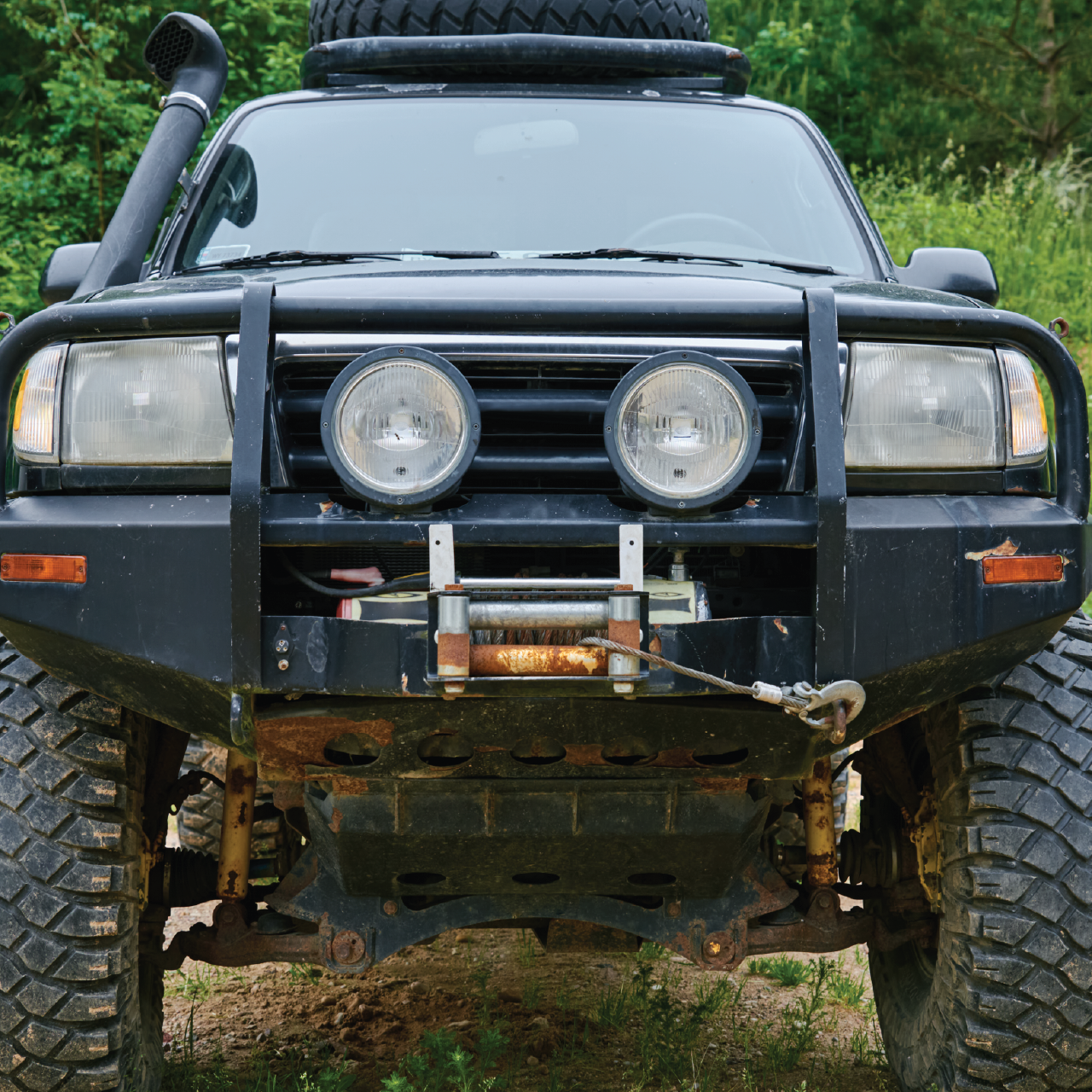
A winch is one of the most powerful recovery tools in your off-road arsenal. It can pull you out of situations where no amount of traction boards or kinetic straps will help. But here's the sobering truth: a winch is also one of the most dangerous pieces of equipment you'll use on the trail. Misuse a recovery strap and you might damage a bumper. Misuse a winch and you can seriously injure or kill someone.
The good news? Most winching accidents are completely preventable. They happen when people skip steps, ignore safety protocols, or simply don't understand the forces they're working with. Let's break down the most common winching mistakes so you can avoid them.
1. Skipping the Winch Damper
The Mistake: Running a winch line under tension without placing a damper (also called a winch blanket) over the cable or synthetic rope.
Why It's Dangerous: When a winch line breaks under load, it stores an enormous amount of energy. That energy has to go somewhere, and it usually results in the cable whipping back toward one or both vehicles at potentially lethal speeds. Steel cable is especially dangerous—it can slice through a windshield, hood, or worse, a human body.
The Fix: Always, and we mean *always*, drape a heavy damper over the winch line once it's under tension. A commercial winch damper is ideal, but a heavy jacket, canvas tarp, or even a floor mat is better than nothing. The damper absorbs energy and weighs down the line if it breaks, dramatically reducing the danger. Some experienced winchers use two dampers on long pulls—one near each vehicle.
2. Using the Hook as an Anchor Point
The Mistake: Hooking the winch cable back onto itself to create a loop around a tree or rock, with the hook bearing all the load.
Why It's Dangerous: Winch hooks aren't designed to handle the sharp bend and concentrated load that occurs when you hook back to your own line. This creates a stress concentration that can damage the cable and cause the hook to fail. Steel cable is particularly vulnerable to this kind of damage—once kinked or crushed, it's permanently weakened.
The Fix: Use a proper tree saver strap (a wide, heavy-duty strap designed to protect trees and create an anchor point) and connect your winch line to the strap with a shackle. This distributes the load properly, protects the tree bark, and keeps your cable in good condition. If you're using a rock as an anchor, wrap the strap around the rock and shackle to it—never hook directly to rock, as it can damage your line and create dangerous sharp edges.
3. Pulling at Steep Angles
The Mistake: Winching when the cable is coming off the drum at a sharp angle instead of straight out.
Why It's Dangerous: Winch drums are designed for the cable to feed straight off the drum. When you pull at an angle, the cable can pile up on one side of the drum, creating uneven tension, damaging the cable, and potentially causing the cable to bind or break. It also puts side loads on the winch motor and fairlead that they weren't designed to handle.
The Fix: Position your recovery vehicle so the winch pulls straight out. If you can't reposition, use a snatch block (a heavy-duty pulley) anchored to a tree or rock to redirect the pull to a straight line. This has the added benefit of doubling your pulling power or allowing you to change the direction of pull without moving your vehicle.
4. Having People Too Close to the Winch Line
The Mistake: Standing near, walking over, or being in the "line of fire" when a winch is under load.
Why It's Dangerous: We already covered what happens when a winch line breaks. Even with a damper in place, you want everyone clear of the danger zone. A failed anchor point, broken shackle, or snapped cable can send hardware flying in unpredictable directions with devastating force.
The Fix: Establish a safety zone and keep everyone at least 1.5 times the cable length away from the winch line during operation. That means if you're using 50 feet of cable, everyone should be at least 75 feet clear—or better yet, behind a vehicle. Only the winch operator should be near the recovery vehicle, and they should stand off to the side, never in front of or behind the winch. The person in the stuck vehicle should remain in the driver's seat to control the vehicle (but be ready to exit quickly if something goes wrong).
5. Not Spooling Under Load
The Mistake: Spooling cable back onto the drum without any tension, resulting in loose, sloppy wraps.
Why It's Dangerous: Loose cable on a winch drum is a ticking time bomb. When you pull a heavy load, the cable under tension will squeeze between the loose wraps underneath, crushing and damaging the cable. This weakens the line and can cause it to bind, making it difficult or impossible to unspool when you need it most.
The Fix: After every recovery, re-spool your cable under load. Have someone drive your vehicle slowly while you operate the winch to reel in the cable, or attach the hook to a secure anchor point and back your vehicle away slowly while winching in. The goal is to get tight, even wraps across the entire drum. This takes an extra few minutes but dramatically extends the life of your cable and ensures it will work properly next time.
6. Letting the Drum Run Too Low
The Mistake: Paying out too much cable and winching with only a couple wraps left on the drum.
Why It's Dangerous: Most winches require a minimum of five full wraps on the drum to anchor the cable properly. Below this, the cable can slip on the drum, damage the drum itself, or pull completely free under load. Additionally, winches are rated at their full drum capacity—as you pull out cable and the drum diameter decreases, your pulling power drops significantly.
The Fix: Monitor how much cable you're using and never go below five full wraps on the drum. If you need more reach, use an extension strap or synthetic rope to span the distance. You can also use a snatch block to effectively double your cable length by redirecting it back toward your vehicle.
7. Winching Too Fast
The Mistake: Running the winch at full speed, especially when the vehicle is nearly free.
Why It's Dangerous: Winching creates enormous forces, and momentum makes them even more dangerous. If you're pulling fast and the vehicle suddenly breaks free, it can come shooting forward and crash into the anchor point, your recovery vehicle, or bystanders. Fast winching also generates more heat in the motor and puts more stress on all components.
The Fix: Winch slowly and steadily. Use a remote control or wired controller so you can maintain a safe distance while maintaining visual contact with the operation. Keep one hand on the stop button at all times. As the vehicle begins to move, use even more caution—often the stuck vehicle will need to drive forward under its own power while you winch slowly to maintain tension.
8. Ignoring the Duty Cycle
The Mistake: Running the winch continuously for extended periods without letting it rest.
Why It's Dangerous: Winches generate enormous amounts of heat. Most winches are rated for intermittent use—typically 1 minute on, 10 minutes off when pulling at or near their rated capacity. Ignoring the duty cycle can overheat the motor, melt internal components, or cause complete winch failure. It can also drain your battery to the point where you can't start your vehicle.
The Fix: Watch your winch's duty cycle rating and take breaks. If you're doing a long, hard pull, stop periodically to let the motor cool. Keep your engine running at a fast idle (1,500-2,000 RPM) during winching to help charge your battery. If you smell burning or see smoke, stop immediately and let the winch cool completely. For extremely heavy loads, consider using a snatch block to reduce the load on your winch.
9. Using Worn or Damaged Gear
The Mistake: Continuing to use frayed synthetic rope, kinked steel cable, bent hooks, or damaged shackles.
Why It's Dangerous: Recovery gear takes tremendous abuse, and damage accumulates over time. A slightly frayed spot or small kink might seem harmless, but under the extreme loads of winching, these weak points can fail catastrophically. When they do, you're dealing with high-speed projectiles and uncontrolled energy release.
The Fix: Inspect all your winch components before every use. Run your hands along the entire length of your cable or rope, feeling for damage. Look for rust, kinks, or crushed sections in steel cable. Check synthetic rope for abrasion, UV damage, or broken fibers. Examine shackles for cracks, bent pins, or deformation. If anything looks questionable, replace it. Your life is worth more than a new winch line.
10. Not Having a Recovery Plan
The Mistake: Starting a winch recovery without thinking through the entire process, considering what could go wrong, or having a backup plan.
Why It's Dangerous: Winching is not a "hook up and pull" operation. Without a clear plan, you're more likely to make rushed decisions, ignore safety steps, or put people in dangerous positions. Many accidents happen because someone realized halfway through that they needed to adjust something and made a hasty decision.
The Fix: Before connecting anything, walk the entire recovery scenario. Identify anchor points, assess the best direction of pull, and look for hazards. Discuss the plan with everyone involved—who will operate the winch, who will drive the stuck vehicle, where everyone else should stand, and what the hand signals will be. Consider what could go wrong: What if the anchor point fails? What if the vehicle doesn't break free? What's your backup plan? This mental walkthrough takes five minutes and can prevent hours of problems.
A Word About Practice
Here's something many off-roaders don't want to hear: if your first winch recovery is a real emergency situation, you're doing it wrong. Winching is a skill that requires practice in low-pressure situations before you're dealing with a stuck vehicle in a remote location.
Find a safe area—an empty field or off-road park—and practice the fundamentals. Practice spooling and unspooling. Practice using a snatch block. Practice with different anchor points. Get comfortable with your equipment before you need it desperately.
The Bottom Line
A winch is an incredible tool, but it demands respect. Every single one of these mistakes has resulted in injuries, vehicle damage, or ruined trips for someone. The physics involved don't care about your experience level or how careful you think you're being—they only care about whether you followed the safety procedures.
Take your time, use proper equipment, maintain a healthy fear of the forces involved, and never let convenience override safety. Your winch is there to get you out of tough spots, not create new ones.
Stay safe out there, and remember: the best recovery is the one where everyone goes home with the same number of fingers and toes they started with.