
The most experienced off-roaders will tell you: it's not *if* you'll get stuck, it's *when*. Whether you're tackling muddy trails, navigating rocky terrain, or exploring sandy washes, eventually your vehicle will find itself in a situation where forward progress stops. The difference between a minor inconvenience and a major ordeal often comes down to one thing: having the right recovery gear on board.
But here's the catch—recovery gear is only useful if you have it with you and know how to use it. You can't exactly order a recovery strap from your phone when you're axle-deep in mud with no cell signal. So let's talk about the five essential recovery tools that should live in your vehicle before you venture off the pavement.
1. Recovery Strap (Kinetic Recovery Rope)
Why You Need It: A quality recovery strap is the cornerstone of any recovery kit. Unlike a tow strap designed for pulling on pavement, a kinetic recovery rope is specifically engineered to stretch under load, creating a smooth, powerful extraction force that's easier on both vehicles.
What to Look For: Choose a strap rated for at least 2-3 times your vehicle's gross weight. A 30-foot length is typically ideal—long enough to keep the recovery vehicle on solid ground while reaching the stuck vehicle, but not so long that it becomes unwieldy. Look for straps with reinforced eyes rather than metal hooks, which can become dangerous projectiles if something fails.
Pro Tip: Never use a recovery strap that's frayed, has been exposed to chemicals, or shows signs of UV damage. Your life depends on this piece of equipment, so inspect it regularly and replace it when in doubt. And always use a damper (like a heavy blanket or commercial damper) draped over the strap during recovery—if the strap breaks, the damper will absorb much of the energy and prevent the strap from whipping back through windows.
2. Shackles (D-Rings or Bow Shackles)
Why You Need It: Recovery straps need to attach to something, and that's where shackles come in. These U-shaped metal connectors with screw pins are the safe, proper way to connect recovery gear to your vehicle's recovery points. Many modern off-road vehicles come with built-in recovery points, but you still need shackles to complete the connection.
What to Look For: Get at least two heavy-duty shackles rated for recovery use—cheap hardware store shackles aren't designed for dynamic loads and can fail catastrophically. Look for a working load limit (WLL) of at least 4.75 tons for most full-size SUVs and trucks. Screw-pin shackles are standard, though some off-roaders prefer bolt-type shackles with a lock nut for extra security.
Pro Tip: Keep your shackles in a easily accessible spot and make sure the pins are hand-tight before any recovery. Over-tightening with tools can make them difficult to remove later, especially after they've been loaded. And never shackle to your vehicle's tow ball or hitch receiver—these aren't designed for recovery loads and can fail or cause damage.
3. Shovel
Why You Need It: Sometimes the simplest tool is the most effective. A quality shovel can dig you out of situations where no amount of pulling will help. Clearing sand, mud, or snow from around your tires, creating ramps for your wheels, or digging out a high-centered vehicle are all jobs where a shovel is your best friend.
What to Look For: Choose a sturdy, full-size shovel with a steel blade and a solid handle—not a cheap folding camping shovel. While compact folding models save space, they often break under heavy use. A short-handled military-style entrenching tool is a good compromise between durability and storage space. Some off-roaders carry both a full-size shovel and a folding option.
Pro Tip: Store your shovel where you can reach it even if your vehicle is buried. Having it strapped to your roof rack or mounted externally is ideal. And remember: digging is hot, exhausting work. Start early before you're completely stuck, take breaks, and stay hydrated.
4. Traction Boards (Recovery Boards)
Why You Need It: When your tires are spinning on ice, mud, sand, or snow, you need something to provide grip. Traction boards are rigid, textured platforms that slide under your tires to give them something solid to grip. They're lightweight, require no second vehicle for recovery, and can get you unstuck from situations where a winch or strap won't help.
What to Look For: Quality matters here. Premium brands like MAXTRAX, TRED, or ActionTrax are engineered to handle the weight and torque of modern vehicles without breaking. They typically come in pairs and feature aggressive teeth on both sides—one side grips the ground while the other grips your tire. Look for boards at least 45 inches long for adequate length.
Pro Tip: Traction boards work best when you use them correctly. Clear away as much problematic material as possible first, then place the boards as close to the tire as you can get them. Engage 4WD (or 2WD if that's all you have), use gentle throttle, and let momentum carry you over and past the boards. If you floor it, you'll just shoot the boards out from under your tires.
5. Portable Air Compressor and Tire Deflator
Why You Need It: Air pressure is one of your most powerful off-road tools. Dropping your tire pressure increases your tire's footprint, improves traction, and provides a smoother ride over rough terrain. But what goes down must come back up—once you return to pavement, you need to reinflate your tires to safe highway pressures. That's where a quality air compressor becomes essential.
What to Look For: Skip the small 12V compressors designed for emergency use. You need a real off-road compressor capable of filling 33-37 inch tires from 15 PSI back to 35+ PSI without overheating. Look for compressors rated at 2.0+ CFM at 30 PSI. For deflating, a good set of tire deflators (like Staun or ARB E-Z Deflators) allows you to drop all four tires simultaneously to a preset PSI, saving huge amounts of time.
Pro Tip: Air down before you get stuck. If you're heading into sand, mud, or snow, reducing tire pressure before you encounter trouble gives you significantly better traction and can prevent getting stuck in the first place. A good rule of thumb: start at 20 PSI for trails and adjust from there based on conditions and how your vehicle performs.
The Recovery Kit You'll Actually Use
Notice what's not on this list: a winch. While winches are incredibly useful, they're expensive, require professional installation, and demand solid understanding of rigging principles. The five tools above are accessible, relatively affordable, and will handle the majority of recovery situations you'll encounter.
That said, recovery gear is worthless if you don't know how to use it safely. Take a recovery course, practice with experienced friends in a controlled environment, and always follow proper safety procedures. Never stand near a loaded recovery strap, always use a spotter, and don't let ego override common sense.
One More Thing: Gloves
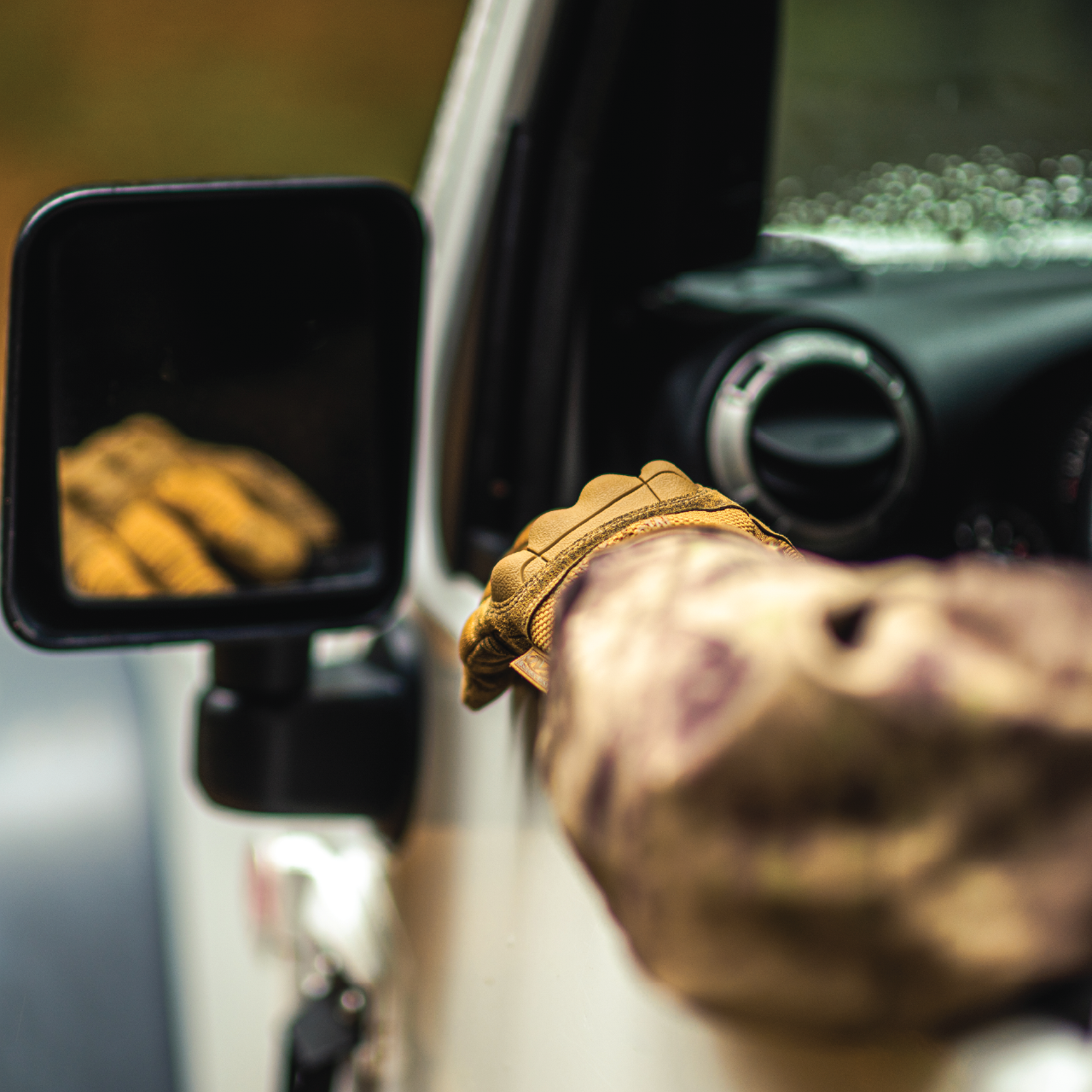
Okay, I snuck in a bonus item. A good pair of heavy-duty work gloves isn't glamorous, but recovery work is rough on hands. Straps are dirty, shackles are sharp, and shoveling without gloves leads to blisters. Keep a pair in your recovery bag.
Building Your Kit Over Time
Recovery gear represents an investment, but you don't have to buy everything at once. Start with a quality recovery strap and shackles—these two items will handle a significant percentage of recovery scenarios. Add traction boards next, then a shovel, and finally invest in a proper air system.
Store everything together in a dedicated recovery bag or bin that stays in your vehicle. Include a pair of work gloves, a tree saver strap (for winch-less recoveries using trees as anchor points), and a small emergency kit with a flashlight, first aid supplies, and emergency contact information.
Most importantly, remember that the best recovery is the one you avoid. Travel with others when possible, know your vehicle's capabilities and limitations, walk questionable obstacles before driving them, and when in doubt, turn around. Recovery gear is essential, but good judgment is the most important tool in your kit.
Now get out there, explore responsibly, and stay safe. The trails are waiting—and with the right gear, you'll be ready for whatever they throw at you.